
To play baccarat, you place one bet: on the Player hand, the Banker hand, or a Tie. The dealer deals two hands by fixed rules, and whichever lands closest to 9 wins. You don’t get any cards of your own, you make no decisions after the bet, and the dealer does all the work. That’s the entire game.
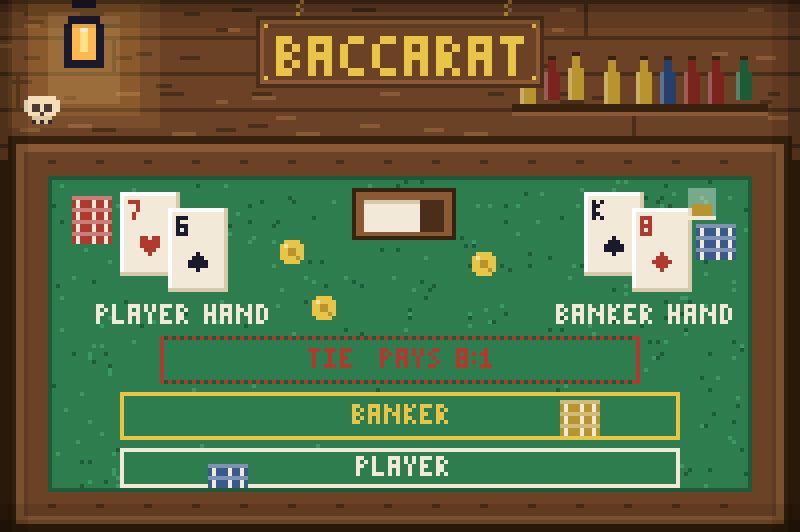
Baccarat is the easiest game on the casino floor. You do very little in terms of making decisions. There are no additional player options, other than placing the initial bet.
I take you through how the hands are scored and why there’s nothing to memorize. Along with insights into the three bets so you know exactly where to put your money.
You’ll also get the truth about those player scorecards and historical data casinos like to show. Hint: they are useless.
What I Liked and Disliked About Online Baccarat
For the past few years, I have been playing online more often. After thousands of hands, I have some things I’ve come to like and dislike about online baccarat.
What I Liked
- Dead-simple gameplay. Pick a bet, sit back, and the game runs itself.
- Varied betting limits, and the limits can run higher than blackjack’s.
- Has one of the best, if not the best, odds.
What I Disliked
- It can get boring if you came looking for excitement. There’s nothing to do between bets.
- The software runs the entire game. Outside of your opening bet, you have no input at all.
The Core Idea: You’re Betting to Get Closest to 9
Here’s the whole game in one sentence: two hands are dealt, the Player and the Banker, and you bet on which one finishes closer to 9.
Notice what that means. “Player” and “Banker” are just the names of the two hands. They aren’t you and the dealer. You can bet on either one or on the two tying. There are no hits, stands, or splits. The outcome plays out on its own.
There is a third-card rule. Depending on the Player and Banker initial 2 cards, they will receive a third card. This extra card can make or break your bet. Do you need to learn this third-card rule? No need, the dealer/software takes care of everything.
That’s why baccarat feels strange to anyone coming from blackjack. In blackjack you make a dozen small decisions a hand. In baccarat you make exactly one, before any card is dealt, and then you watch.
How the Baccarat Hands Are Scored
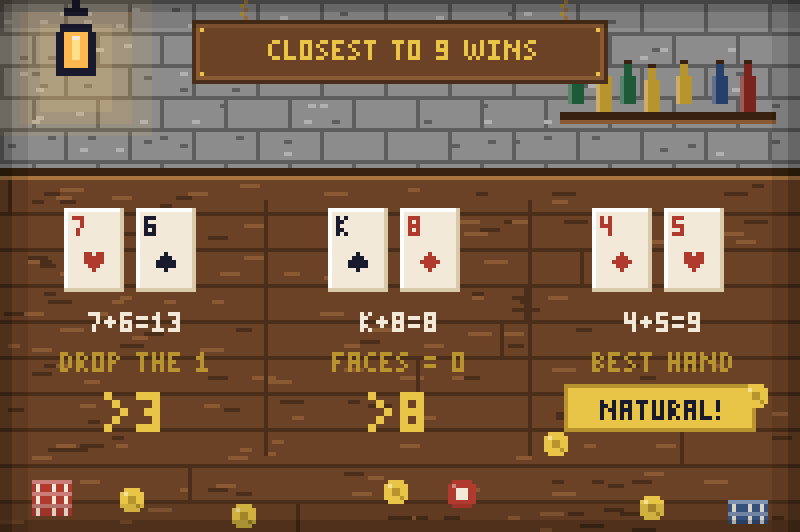
Each card is worth its face value. An 8 is worth eight, a 4 is worth four, and … well, you get it. There are two exceptions.
- Tens and face cards (Jack, Queen, King) are worth zero.
- The Ace is worth one.
The unique aspect of baccarat: a hand can never total more than 9. When two cards add up to double digits, you drop the tens digit and keep the rest.
- A 7 and a 6 add to 13, which scores as 3.
- A 9 and a 5 add to 14, which scores as 4.
- A King (0) and an 8 score as 8.
And the best possible two-card hand? A total of 9. If either hand is dealt an 8 or 9 on the first two cards, it’s called a “natural,” and the hand ends with no more cards drawn.
The Third-Card Rule You Never Have to Learn
Sometimes Player or Banker hands will draw a third card. The decision to draw another card is decided by a fixed set of rules based on the totals. The rules themselves are not complicated to learn, but the good thing is, you don’t have to. The dealer applies them automatically.
Even though you don’t need to memorize the third-card rule, I am adding the rules below in case you are curious. It’s always a good idea to know how baccarat operates.
- Player cards are 0-5, they get a third card.
- Player cards are 6 or 7, they don’t get a third card.
- Player did not get a third card, and Banker cards are 0-5, they get a third card.
- Banker always stands on 6 and 7.
The tricky part is when the Player does get a third card. Depending on their hand value, the Banker follows the rules below:
| Bankers Two Cards | Player Hand Value | |||
|---|---|---|---|---|
| 0-2 | 3 | 4 | 5 | 6 |
| 0-9 | 0-7 | 2-7 | 4-7 | 6,7 |
As you can see, many things need to happen for a third card to get dealt. If you want to learn the rules, go ahead. The casino, dealer, or software will still run the rules for you.
The Three Baccarat Bets and Their Cost
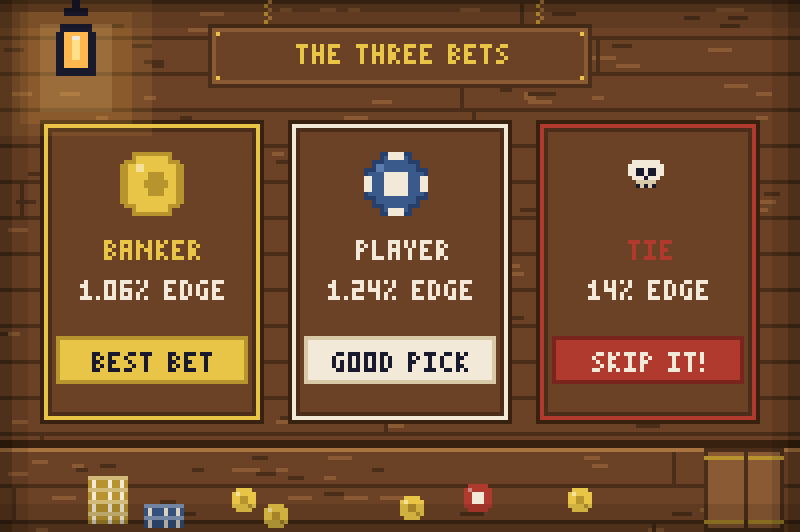
As you only place your bet on one of the three options, its important to know the odds. You would think the house edge is the same between Player and Banker. They are slightly different, giving one the edge over the other.
| Bet | House edge | Verdict |
|---|---|---|
| Banker | About 1.06% | Best bet to place |
| Player | About 1.24% | Still a decent edge |
| Tie | About 14.36% | Don’t bet |
I want to clear up some hate around the tie bet. The odds and edge are horrible. So, why would anyone place that bet? Simple, the payout for a tie bet is 8:1. I am a never-say-never person. I have placed a few baccarat tie bets in the past, and they are usually because:
- I have a few extra chips I want to get rid of.
- I have been on a winning streak and am feeling frisky.
What I never do is place a tie bet in hopes of winning back any lost money. That just won’t happen.
Look at the odds. The Banker bet has one of the lowest house edges of any casino game, at 1.06%. The Player bet is close behind at 1.24%; not a bad bet to place if you want to switch things up.
The Tie bet, despite its tempting 8:1 payout, has a large house edge of 14.36%. That edge is almost as high as pure luck games like keno and lottery. This makes it one of the worst straight bets of any table game.
The Banker Bet Catch: Commission
There’s one catch with the Banker bet. Because it wins slightly more often, the casino takes a small commission, usually 5%, on Banker wins. That commission is already baked into the 1.06% edge. Despite this, Banker is still the best bet.
The Gap Between Bets
The gap between the bets is bigger than it may seem. Over a long session, a bet at 1.06% costs you a fraction of what the same money bet on the Tie would, because 14.36% is more than ten times the loss potential.
The difference between a smart baccarat player and a reckless has nothing to do with skill. There is no skill involved or needed. It’s simply deciding where they should place their chip. Banker or Player can keep you in the game longer, and maybe even get you a decent profit. The tie quickly empties your bankroll.
To answer what’s the safest bet in baccarat?, bet Banker, skip the Tie.
Played 909 Hands of Baccarat
I played 909 hands of online baccarat, in honor of the natural nine. Why? As an actuary I like to analyze the numbers for myself. Reality doesn’t always play out how the math makes it out to be.
Know the math says “1.06% house edge”, actually experiencing it is different. I ran a test of 909 hands of online baccarat at $10 a hand. Every bet was on Banker. That is what the guide, and myself, advocate for, so I put my money where my mouth is.
The Setup
- 909Hands
- $10Flat bet
- Bankerbet
- 2$1,000 bankrolls
It did not start well. My first $1,000 bankroll was gone after 376 hands. I had to add a second $1,000 deposit to get to my goal of 909 hands.
As a quick disclaimer: under any other circumstances I would have bailed long before I had lost my entire bankroll.
How My Baccarat Gameplay Ended
Here’s how all 909 hands ended. The green bar is my wins, the striped crimson bar is my losses, and gold is a push (both hands tied):
| Result | My $10 Bet | Round 1 (376 hands) | Round 2 (533 hands) | All 909 |
|---|---|---|---|---|
| Banker won | Win, +$9.50 | 120 | 320 | 440 |
| Player won | Loss, -$10 | 214 | 168 | 382 |
| Tie | Push | 42 | 45 | 87 |
The Banker win pays $9.50 instead of $10 because of the 5% commission covered earlier. Now the money.
| Round | Won | Lost | Net |
|---|---|---|---|
| 1st Bankroll | $1,140 | $2,140 | -$1,000, bankroll gone |
| 2nd Bankroll | $3,040 | $1,680 | +$1,360 |
| Total | $4,180 | $3,820 | +$360 |
- $2,000Total buy-in
- $2,360Final bankroll
- +$360Overall profit
Long Road to a Profit
I managed to walk away with a $360 profit. You may say “he made a profit, that is a great game!”. The details will show you what went into making that profit.
It took hours and several game sessions, and I placed the same bet, every single time. That can get boring, very fast. Especially when there is nothing else to do but bet and watch each round happen.
First round, I lost the entire bankroll and anything I had won at the point. For players that have a limited budget, once they hit that wall, there is no going back. Luckily I am able to add more to my bankroll and continue, but this is not the norm, its the exception.
Looking purely at the statistics, Round 1 proved that Banker was not the ultimate winner. While Round 2 showed Banker bet had more luck on its side, giving me more wins. That’s what variance looks like when you spread it across 909 hands.
The Truth About “Hand History” in Baccarat
Walk up to a modern baccarat table and you may see a screen with some historical information on it. If you play online, it also tracks everything. Those screens “track” patterns in past hands: streaks of Banker or Player, alternating results, and the hand values.
You may think you can take advantage of this to predict the next hand or create a strategy. I am here to tell you it is all bullshit.
Every hand of baccarat is independent; even moreso if you play online. You are dealt from a fresh deck with the same odds. Casinos have come to realize that gamblers can be superstitious. One way they feed on that is by giving players a sense of control over the outcome of a baccarat hand.
One thing I have come to realize after analyzing the hand history is that most of the time they don’t even show you the correct information. This is especially the case for land-based casinos. They may show you a total hand value of 7, showing you cards 3 and 4. However, the actual hand was a 6 and Ace.
Both add up to 7, so why is that an issue? The cards themselves are what matters. When you count cards in blackjack, it matters what the value of the card is. The same is the case for baccarat. If you think there are fewer 3s and 4s based on what the tracker shows, you may believe the odds are tipped in your favor with more higher-value cards.
All I can repeat is, there’s no system to learn or pattern to decipher. Online baccarat is a game of pure chance. Bet the Banker, manage your bankroll, and enjoy the best house edge card game the casino has to offer.
Full-Size Baccarat vs Mini-Baccarat
Full-size baccarat is the traditional, high-limit game.
Mini-baccarat is the quicker, more accessible version.
| Difference | Full-Size Baccarat | Mini-Baccarat |
|---|---|---|
| Table Size | Large (12-14 Players) | Small (7 Players) |
| Game Speed | Slow, More Traditional | Fast, More Hands Per Hour |
| Who Handles The Cards | Players Take Turns | Dealer Controls Everything |
| Betting Limits | Higher ($50-$100,000) | Lower ($5-$5,000) |
| Atmosphere | Formal, social, and often high-limit rooms | Casual, like a blackjack table |
| Number Of Dealers | Multiple Casino Staff | One Dealer |
| Card Squeezing | Common, Cards Revealed Slowly For Suspense | Uncommon, Most Tables Prefer Fast Gameplay |
| Availability | Less Common, Mainly Larger Casinos | More Common Online And Regular Casinos |
Side Note: I hardly play full-size baccarat anymore. I enjoy the higher betting limits, but players squeezing (bending) the cards is my least favorite part of the game. If I am going to have longer game sessions, I prefer faster play.
Online Baccarat vs Land-Based
Having played online and at land-based casinos, there are some differences between the experience when playing baccarat.
Online Baccarat
Pros
- Extremely simple game, made easier with one-tap bets.
- Much faster gameplay, no waiting for slow card reveals.
- Wide variety of betting limits, with much lower minimums.
Cons
- The Banker edge may not be as accurate.
- It can get boring. Click once, the game plays, and you are done.
Land-Based Baccarat
Pros
- Higher betting limits, bigger payouts.
- More stable outcomes over time.
Cons
- Limited selection.
- The card benders. Players that squeeze and draw out the rounds are the worst.
There is no “this one is better” decision. Pick the option that best suits you and your situation. It simply comes down to:
- Are you close to a casino or is hopping online faster?
- How much bankroll can you afford to risk?
- Do you want high-energy and noise or prefer quiet focus?
I do not have a strong opinion with baccarat. It’s other games where I would recommend you try the land-based casino floor experience at least once in your life.
Common Questions Around Baccarat
What Are the Basic Rules of Baccarat?
Is Baccarat Easy to Learn?
Is Baccarat a Game of Skill or Luck?
What Is the Safest Bet in Baccarat?
What’s the Difference Between Baccarat and Mini-Baccarat?
Where to Go From Here
You now know how to play baccarat; online or at the casino. Three bets to place: Player, Banker, or Tie, and the hand closest to 9 wins. The dealer does everything else, including the third-card rule you never have to learn.
Keep it simple. Bet Banker for the lowest edge, skip the Tie no matter how good the 8:1 looks. Start at a low-minimum mini-baccarat or online table while you get comfortable.
Set a budget before you play. Baccarat is pure luck, and while the Banker bet keeps the house edge low, low is not zero. Play it as entertainment you can afford to lose money on, take breaks, and step away when the fun stops or you’ve made enough for lunch.
Free, confidential help is available any time through the National Council on Problem Gambling at 1-800-GAMBLER.